
Let’s face it, watch “attachments” as I’ll call them for the moment, to include leather straps, metal bracelets, nylon, silicone or rubber, are as personal to the wearer as the shoes on their feet, the car they drive or the watch they have on their wrist. Some people who are fashion conscious are going to be more attuned to the look and feel of a watch that is attached to their wrist by some form of fabric or material and color that suits them. Comfort, complementary colors etc… all play into this. As a retailer, I’m always having a hard time putting a watch into the showcase with a strap that “I think” will attract, complement and add to the allure of the watch. That being said, there’s nothing much I can do to the emotions of a customer who might glance over a truly stunning timepiece with a strap that “just does not work”... for them. I get it. And I usually tell my staff that they should encourage that customer to consider something that might compliment “their” taste. A black strap on a gold watch and a brown strap on a steel watch does not always work. Would the color, finish or treatment to the wheels on your car make a good analogy? Most early pocket watches, at least in the USA, were sold as a movement only and then the watchmaker would have a selection of cases that he could put the watch into for his customer. Maybe he or she wanted a beautiful solid gold hunter case with birds or an elk engraved upon it but didn’t necessarily care about the top grade movement in it. Conversely, most railroad grade watches were fitted into gold filled cases… much cheaper… as the money was spent on the quality of the movement, imperative at the time! The same can be thought of today with regards to a wristwatch. But, and I’ll quantify this, the watch strap is more “disposable” than a solid gold case of a pocket watch or even a gold filled case. In the early 1900’s one could purchase a decent pocket watch movement for $30-$60. One could add $75-150 or more for a solid gold case! But a gold filled or nickel case could be had for a fraction of that. Today, there are a plethora of watch strap manufacturers, offering exotic to common leathers and metals. In the natural scope, there’s leather that can be dyed to offer a rainbow of colors and stamped to appear like lizard skin, crocodile or ostrich.. Many are also genuine like shark, bison, calf, etc… and even some very exotic leathers. …thankfully no more elephant hide watch straps… they have been long deemed illegal! That being said, if a leather strap is your thing, there’s a myriad of choices and price ranges. We typically stock this variety from $20 - $200. And, you tend to get what you pay for. Metal bands are another way to adorn and compliment your watch. Links vary in look and feel as do the materials. Stainless steel being the most popular, but also combinations of steel and gold are also very popular. Titanium, sterling and ceramics also have come into favor in the last few decades. It’s all a matter of personal taste. So, the next time you are looking to upgrade your watch attachment, consider this. ACCESSORIZE! As frivolous as it might sound, a strap can be an accessory - match your shoes, belt, handbag or mood. Colors can vary greatly! Application is also something to consider. Even leather straps that are treated to be water resistant are going to degrade with time. So if you are consistently subjecting your watch to water or perspiration, I’d recommend nylon, silicone, rubber or stainless steel. But then look at it this way, it’s kind of like polishing up a pair of shoes and fitting them with new laces. $40-60 can add a lot to the look and feel (not to mention security on your wrist) for your timepiece. It can make a measurable difference to the appearance of the watch on your wrist! We’re always here to help make the selection (and fit it) to your beloved watch. If it looks like it’s time to upgrade the look and feel to your wristwatch, don’t hesitate to visit with us. We’re happy to offer a selection of different colors and finishes that might compliment your taste and desired look. Happy spring colors to you all…. And be well, Dave Well, if you haven’t been to the Last Wind-Up lately, it’s about time…. Or at least that is how the saying usually goes. But this time, there’s more to tell.
In the fall of 2023, I was faced with a decision that I did not take lightly. For a number of reasons, I decided that it was time for downsizing. This was a difficult decision, but one that in the end, I trust will still fulfill my passion for watches as well as offer my customers the same service we’ve offered for the last 33 years; a great selection of new and pre-owned watches, the best service and an intimate place in downtown Bozeman to meet and share the passion for the craft. In December, we moved upstairs into the Mezzanine of 11 E. Main Street. Some of you might have already visited my facilities upstairs. For those who have not, I’d encourage you to stroll down the hallway and follow the signage to the Mezzanine location. We’ve shortened our hours of operation to Tuesday - Friday, 10-4 and by appointment for those who are not able to make it during those times. I will admit, there are a few customers who were a little confused about this move. We still have not gotten the old sign restored and mounted to the outside of the building… but soon. But what I will say I’ve been flabbergasted by the response from most customers. It is such a great feeling to hear “I’m so glad you are still here”. “You are what Bozeman is all about”.... This warms my heart and feeds my continued enthusiasm for keeping Bozeman ticking! About a month ago, I was contacted by a father and son team who are also passionate about watches and have their own YouTube channel. I, having started my journey into watches at a young age, figured that I’d better do my part and participate in an interview with John and his son Elliot. You can watch the video here: https://www.youtube.com/watch?v=kDotIqrB6fY or simply go to their channel Father and Son Watch Talk. Once they got me going, as some of you will know, I filled the interview with a lot of anecdotal stories about my beginnings and subsequent travels through this career. Have a look if you are interested. Most recently, my wife and I took our spring break to Puerto Rico and then on to Culebra, a small island off the coast, about an hour ferry ride. While in Old Town San Juan, which I will say is an enchanting place, we walked, ate and enjoyed all that we could. I even managed to pop into a few watch shops. One in particular I will mention was Rolmalco. We approached the door just after closing… but I pulled out one of my business cards and showed them through the door that I too was a watchmaker. Without hesitation, they opened up their shop to chat. A family business. The father, originally from Columbia, his wife, son and another watchmaker. . We chatted like we’d known each other. Their graciousness and enthusiasm for the business was obvious and heartwarming. If I ever go back to Old San Juan, I will make it a point to visit with them again and maybe even share a meal. Back in Bozeman following spring break, we were spoiled with great weather…. Highs in the 60’s and 70’s… but alas, it is Montana and it is currently snowing. No yard work this weekend. That will have to wait! In the meantime, I wish to thank all of my customers, staff and fellow watch enthusiasts for their continued support and patronage. Where would I be without you? Dave Sitting here at my desk at home, I’m staring out the windows at the rain shifting directions as is usual at this time of year in Montana. The wind whips the aspen from one direction to the next. Late afternoon or early evening thunder boomers are not uncommon. It’s time to write another journal entry. But this one is, somewhat like my last, a bittersweet one. One never knows what singular event might change the course of one’s life. I barely got into a small private boarding school and I barely got out of it. That is to say, I was not a scholar in typical form. Grades were not the proving ground for me. I was a C student at best. Needless to say, that’s where I met a gentleman who was hired by the school for $1.00 a year…. He was retired and essentially offered his expertise to help in the chemistry and physics labs. He also held a class (not graded) called Timepieces. This is where the seed was planted. The first time I saw the workings of a pocket watch, I was smitten. It was, as the legendary George Daniels put it, a universe in itself. It combined the most delicate and precise mechanical engineering, the most elaborate decorative features (admittedly superfluous in regards to function) as well as a historical encyclopedia of advancements that culminated in something as “simple” as a watch! Metallurgy, thermodynamics, engraving, precious metal work, enameling and more. There was something about all of these artisans that brought this apparently simple thing, a watch, into a new realm for me. Fast forward… I was accepted, first in my high school class, into college. Maybe it was because of this fascination with watches, maybe not. Either way, the first two years of college were not building a foundation of a career. I would spend idle time in my dorm room tinkering on watches that I’d ordered via dealers through the mail. Then, my parents were wondering….. To make a long story short, I ended up in London, working for A-1 Watch and Clock Shop. Following that, I was offered an internship at Christie's Auction House in New York City. What a GREAT opportunity! Then, with some life experience under my belt, I completed my college education in Boston and opened up a small repair shop in the North End. In 1990, I packed up and moved to Bozeman to open up the Last Wind-Up. The main focus of this particular entry was that no matter what you might think you will become, there’s a good chance that this will change, or at least be modified. And it is part of this transformation that has brought me here. One summer, while working in the financial district for the firm my father was employed by, I showed him a watch that I’d just recently purchased at a watch trade show. I told him how proud I was that I’d purchased it for at least half of the book value. He said, very plainly, “it’s not worth twice what you paid until you sell it for twice what you paid.” Lesson learned! My father offered me another piece of advice. “I don’t care what you do in life. As long as you are happy and productive, success will find you.” I can’t say enough about his words of wisdom and I’ve passed that on to my kids as well. Dad passed this year, about a week after his 85th birthday, on May 25th. He offered me the watch that was given to him by his parents on his 21st birthday. I hold it dear to my heart as I know he knew I would treasure it and honor it with care and admiration, as I have his generosity enabling me to pursue my passion. RIP, Dad. Your legacy will endure! 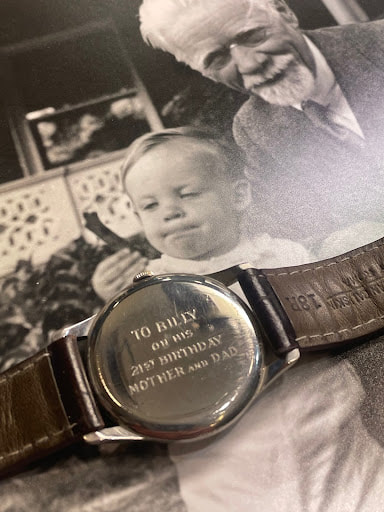 Dad and his grandfather, 1940
 There was a day when watch companies would generously offer spare parts for their watches to watchmakers and parts houses, across the country. This was a way of assuring timely and professional repairs for their watches. I have drawers full of original material from specific brands, mostly vintage, but some contemporary too: Elgin, Hamilton, Waltham, Gruen, Bulova as well as Swiss brands such as Rolex, Omega etc… But in recent years, some of these brands have begun restricting the sale of these parts for one reason or another.
A simple gasket or mainspring, stem, crown etc… should not prevent the watchmaker from fulfilling a customer’s request for a repair of their timepiece. But companies are placing requirements of certification in an effort to restrict the sale of their parts. Some require a 1-2 week class in a service center in an effort to assure control of their parts distribution. Rolex is in the limelight as one of the most restrictive. One must be CW21 (certified watchmaker 21st century) in an effort to apply for a parts account. This would require years of training and then passing their testing requirements. But then, on a whim, that account gets closed. I’ve heard of watchmakers who have had an account for decades, only to be sent the fateful letter stating that they are no longer able to buy parts. They would, on occasion, send a representative to the business, unannounced, only to be scrutinized (with photographs and notes) as to the condition of the workshop. If you had aftermarket parts in stock, you’re axed! If you did not have the latest water pressure testing equipment (north of $13,000), then you would be cut off. I could get into the whole John Deere debacle of the same kind, but craftsmen as well as farmers and automobile enthusiasts and repair shops should be able to buy spare parts, tools and electronics without encumbrances from the companies that made those parts. They purchased the tractor, they should be allowed to fix it and be offered technical assistance from the company that made the tractor. In the real world, there are good technicians and not so good technicians. Those who excel in their world are successful and maintain a good livelihood. Those who are less than skilled, will fall by the wayside as customers will stop requesting their services. Survival of the fittest. Last month we lost a skilled legend, Barry J. Marcus. My very first journal entry was about Barry, back in 2017. Barry was staunchly devoted to his craft as a watchmaker, servicing both modern and vintage watches In the final pages of his book, Watches I Have Known, which he co-authored with his daughter Julie Campisi, he sends a letter to the American Watch and Clockmakers Institute, canceling his membership. He mentioned how the industry used to be and then what it had become, something he did not recommend to his grandson, sadly. I still believe there is a need for craftsmen and women and we clearly need to make available the training and parts to be able to fix stuff ourselves and not be beholden to a giant corporation. I hope we never come to the point where, as Barry wrote, “Would the government permit General Motors to state the installation of the DieHard battery rather than a Delco to negate the guarantee of the car? What next?” I will close with Barry’s obituary, RIP. MILFORD - Barry J. Marcus, 88, of Milford passed away peacefully on Tuesday, January 17, 2023, surrounded by his loving family. He was born in Lawrence, MA on November 17, 1934, to Israel and Betty (Rappaport) Marcus. Barry was best known for his love of repairing watches. He was a fourth-generation watchmaker who began learning the family trade at age 10. He worked alongside his father at Marcus Jeweler on Main Street, Milford until becoming its owner, in 1971, after his father retired. In 1986, Barry opened his watch repair shoppe. He loved visiting with friends and customers, while repairing their watches. Barry built a reputation on high skill and more than fair pricing. His specialty was restoring family heirlooms. Barry understood that a watch’s sentimental value was more important than its monetary value. In 2014, Barry and daughter Julie self-published “Watches I Have Known” a compilation of his Papa Barry stories. Barry did not retire. He was often in the shoppe 7 days a week. Right up until he passed away, he was asking to go to the shoppe, there were watches waiting for him. Barry proudly served in the U.S. Navy as an Instrumentman on the U.S.S. Frontier. He was an avid sailor berthing a sailboat on Narragansett Bay until 2017. He was active in the Milford community serving on the Milford Retail Board of Trade, Concerned Citizens, B’nai Brith, president, the Woodland and Brookside School Building Committees, Rotary Club, president 1971-1973, and a long time Town Meeting Member. Barry was a member of Congregation Etz Chaim in Biddeford, Maine. One aspect of watch repair and restoration that often goes overlooked are the craftsmen and women that offered their services to a particular watch. Manufacturers get a lot of hype and some independent watchmakers make it to stardome, but what about the average repairman? Where’s their legacy? They are most often shrouded in the minuscule codes, lightly hand scratched in the back of a watch case. What are those scratches on the inside of a watch case-back? Over the years, many folks have asked me about these and the answer is simple… but often shrouded in mystery. 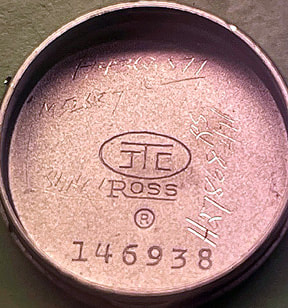 In my 35 years or so as a professional watchmaker, I’ve serviced thousands of timepieces. Some of these date back into the early 1800’s. And many, if not all of these timekeepers, had a number of hand scratched insignia or code on the case protecting the movement, be it a wrist watch or a pocket watch. I’ve seen watches that have the same “signature” with coded dates offered three or more in a row, showing that the owner of the watch had the watch serviced by the same watchmaker many times over the years. Historically, with regards to pocket watches, many early repairmen would put a thin piece of paper in the back of a watch case as an advertisement, while also incidentally, protecting the case from rattling in its outer case. 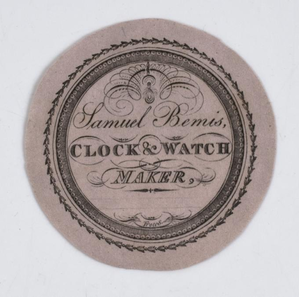 Having to open the watch case daily to wind the key- wound timepiece, the owner would no doubt have viewed this watch paper hundreds of times. On the reverse, the watchmaker would put an abbreviated notation of what was done to the watch. “℅” was for clean and oil. “BS” was for balance staff and “MS” for mainspring. And sometimes one might find the prices that the watchmaker charged the owner. When English and early American watches were housed in standardized cases and key wound watches lost favor to stem wound watches, using paper in the backs of watch cases faded and short codes were scratched into the case-back of pocket watches. Some of these were issued by the American Watch and Clockmakers Institute, and others were of their own design.
For nearly 30 years, I’ve simply put my initials along with the month and year. Others still use the code that they were offered by one institute or something that they simply devised themselves. It would offer the watchmaker a reference as to when he last serviced the watch. Now, with computer based record keeping, the need for a scratched insignia is not so necessary. In fact, in the last 10-15 years, I’ve seen numerous Rolex watches with the “Sharpie” insignia, TXRLX, meaning the Rolex service center in Dallas, Texas. In the last year or two, I’ve come across signatures from a watchmaker I know (and have gone fishing with) from Portland. I try my best to keep my signature small and unobtrusive, but I like the fact that my horological “graffiti tag” might someday be noticed. I’ve seen a handful of watches that I serviced 10-20 years ago. It’s kind of like seeing a distant friend again. Hopefully, a watchmaker in 50 years or so might see my signature and acknowledge my workmanship and not look down upon it but only see the restorative skills that I’ve offered the watch to bring it back to working condition. The peak of the summer season is in full swing here in Bozeman and there’s much to be grateful for. The last few summers have been consumed with smoke filled skies from the forest fires here in Montana and to the west of us, not to mention covid. Thankfully, we’ve not been subjected to that kind of calamity thus far this season. In early June, we had a torrential downpour that overwhelmed the Yellowstone River as it leaves Yellowstone National Park. Roads were washed away, bridges were destroyed and homes were literally swept into the river. This was devastating to the people and businesses that thrive along the river and those that border the park. Thankfully, the community rallied and within a few weeks, most of the park was open. All of us in Southwest Montana feel privileged to be on the edge of such a natural treasure. Please consider supporting the communities bordering the park to help bring their livelihood back to normalcy.
The shop has been busy as usual this time of year. Locals and tourists are out and about, keeping the businesses on Main Street busy. I felt compelled this evening as I sat at home in an empty house…. wife Amy is at a music venue in the Paradise Valley and daughter Brenna is at camp, to write about a customer that came into the shop today. Originally from Mexico City, he now resides in Salt Lake City with his wife. When he came in, I had no idea of his passion for watches. We shared stories, exchanged feelings about certain elements of watches and essentially had a great visit. What struck me most about this visit was that he’d seen an article or posting on a site about the Last Wind-Up and decided that he and his wife would take a road trip to Bozeman to visit my store. WOW. How could I not spend time with a guy who was so smitten with watches and virtually enthralled with my shop to drive that distance, just to see me? It was an honor. This is exactly what it’s all about. There are folks who look at a watch and think it is just a time-piece and there are those who understand that there is much more to the story. Be it a new piece or an heirloom watch with provenance of the original owner, each watch has a story and a potential history. My wife, last night as we were settling into bed, suggested (actually insisted), that I write down the stories of the watches and clocks that I personally own. “They are all in your head….and you need to write them down”. This brings to mind my very first journal post about Barry Marcus, a watchmaker from Milford, Mass. His book, Watches I Have Known, is about the people who own the watches…. Maybe I should listen to my wife and write about the watches and clocks of my collection. They all have a story and unless it is preserved, they are lost for future generations. A saying I heard once, kind of sums it up. “You never see a U-Haul following a hearse”. My customer from Salt Lake recalled his dad, still alive, wearing a Mido wrist watch and still does. I asked if he had been promised it after his passing. He said no…. but I hope he someday becomes the new caretaker of the watch his father has worn for so many years. With the summer upon us, there is fishing in the future. Off to Idaho in a week or so for new waters with Oscar (my certified watch-dog). Tight lines! Maybe I’ll bring the laptop and start my version of Watches (and clocks) I’ve known. Be well. With my last journal entry published in November, I figured now was as good a time as any to offer an update to my faithful readers. It’s been two years since the shop has closed for spring break and so we’ve all headed to distant parts to get a breather. One goes to Vegas, another to Phoenix and others parts unknown. My wife and I, after having waylaid our last trip to Mexico in 2020, decided that we had to go…. And here I am. Isla Holbox, on the tip of the Yucatan Peninsula is where we are spending the next week. Flip flops and not snow boots, t-shirts and not fleece. I’m all over it. Time to relax and gather thoughts and reflect on the past few months. We at the Last Wind-Up had a stellar fall season. Lots of vintage sport watches flying out the door, from Rolex and Breitling to Omega and Tag. I could not be more proud of my staff for making this all happen. The vintage watch market is about as hot as the new watch market. Some new models are selling for double retail! Who saw this coming? The resurgence of mechanical watches is outstanding. The dissemination of information about these watches is flowing through the internet at lightning speed. And since the launch in July, my watch brand, DB, is selling beyond my expectation. With a total of 50 movements and 50 cases, there are about 20 pieces remaining. The response has been excellent and I could not be happier. Thanks for all your support as this enables me to continue to pursue my passion for designing functional and appealing watches for my clients. So, for those who follow this journal, there is another model in the works. I think this time off will give me the necessary inspiration to solidify the details, but I am leaning towards a more robust “field watch”. An automatic, three handed timepiece of similar 38mm size would be a great addition to the line-up. Graphics and other details are yet to be determined but keep an eye out for updates here or in the shop if you happen to stop by. After all, your input is greatly appreciated! With a two year hiatus from a vacation, thanks to Covid, I’m wondering more about the significance of “time off”. It is generally accepted that Americans tend to take fewer vacations than most developed countries. The Swiss, Germans and others take a month off. This must certainly have a beneficial effect on their work ethic. We could learn something from this method. I feel fortunate to be able to have time off to experience other places, people and their culture. Here on the tip of the Yucatan peninsula, I’ve had some time to eat some wonderful meals, spend time with my wife, see the beautiful island of Holbox and visit with the locals. As many of you know, I enjoy fishing and I am pleased to have landed my first tarpon ever, on a fly rod. It is not like fishing in Montana, this I can say for sure. These silver giants are stealth and easily spooked. My guide had near x-ray vision as he poled me around the mangroves and flats searching for the fish. We were hunting! Once located, the fly has to be presented with great elegance and dexterity. Too big of a splash and they are gone! I can vouch for that as it happened numerous times. I’m not used to throwing a line with a 9 weight rod, 40-60 ft out to the target (side casting). And setting a hook is not done the same way as one might on the Yellowstone or Madison rivers. I lost a substantial tarpon because of this lack of understanding as it launched into the air and dislodged the hook. But when that first one came to the boat after 3 magnificent leaps, I was ecstatic. So with only another day left of this glorious time off, I’d better stop working and take in the most of it. As always, thanks for reading my posts. Be well, stay healthy and keep in touch.  There comes a time when it feels right to make adjustments to one’s business and hope that it works, and that your customers are amenable to the modest modifications that are sometimes required or necessary. Not that we’re making any dramatic changes to the Last Wind-Up, but this is simply a thought that came to me some time ago and I figured it was time to reinforce our current vision as a retailer in downtown Bozeman for the last 31 years.
So for those of you who are privy to Bozeman and some of the publications that abound, either in print or online, there is a “Best of Bozeman” survey. Readers vote on a veritable multitude of categories ranging from the best sushi to the best podiatrist. There are over 100 categories and for some reason or another, there is no category the Last Wind-Up fits into very well. I wish it were otherwise, but I get it. Best place to buy or get your watch serviced? Slam dunk! So be it. I know where we stand, but for those that have not experienced what we offer, here’s an introductory course. First and foremost, we are a timepiece shop. We primarily buy, sell and service watches. We install batteries, somewhere to the tune of about 2,000 per year. We have a huge selection of watch straps from basic leather to exotic materials like lizard, alligator and ostrich. We have thousands if not tens of thousands of watch crystals in stock from the early 1900’s to contemporary glass and sapphire. And spring-bars….you know, those little pins that hold your strap or bracelet to the watch. We have them by the score and take pride in offering those complimentary since the day I opened the Last Wind-Up in 1990. Clocks- We have everything from small alarm clocks, to tall case (grandfather style), cuckoo clocks directly from the Black Forest in Germany as well as novelty clocks for the kitchen, sewing room or kids room. We don’t service clocks anymore like we used to, but we’ll help you find the right technician for your clock should you need assistance. Then there’s the other items we have for sale that most people would not necessarily associate with a watch and clock shop. We have knives from an assortment of local bladesmiths as well as smaller manufacturers. We have only stocked USA made knives and we add more small manufacturers whenever we find brands that we believe will suit our clientele. We also have some vintage estate jewelry as well as local Bozeman made items from Red Clover https://redclovercustomjewelry.com/ and Bernadette’s https://www.alison-bernadettes.com/. We also have shaving accessories. I got on this kick about 10 years ago. I was personally tired of the disposable plastic blades and general shaving material, so I looked back in time and found suppliers that offer double edge safety razors, shaving brushes, soaps (some from Montana) and bowls etc. For those unfamiliar with this traditional method, we’re here to guide you in saving the landfills from plastic and experiencing a clean, close shave. Just ask me if you need some advice when you come to visit. I think you will be pleasantly surprised by the shaving experience! So, with the holiday season fast approaching, I had to share this with you all. From watches for the kids starting at under $10 to highly collectible, pre-owned watches by Rolex, Omega, Breitling, Tag Heuer and everything in between, we stick by the saying - If you haven't been to the Last Wind-Up lately, it’s about time! And we would not be here without the support and patronage that you have all offered over the last 31 years. For this, we say thank you! Have a wonderful Thanksgiving. Be safe and have a healthy and happy time with your loved ones. And stop by and say hello. My last entry was in March… and I’m hearing more and more from my enthusiasts (J. Davis, noted), that I need to keep plugging away. So here is a slightly philosophical perspective on time … Analog vs Digital. After a nice fishing trip in eastern Washington with a watchmaker buddy of mine, his son and Oscar (of course), I had some time to think. Driving has a way of offering that time to ponder, especially if the radio is off, which it was for most of the 7 hour return journey to Bozeman.
A number of years ago an elementary teacher came into the shop and saw a particular selection of analog watches, which we’ve sold for a number of years. Slap watches. One of the few pieces that I’ll stock from “over there”. She asked if she could get a discount for a bulk purchase. And after I inquired why, she informed me that she wanted to get one for each of her students to assist them with learning how to read analog time. Hallelujah! YES! Why am I so stuck on hands and numerals? Some of this may harken back to my college years as a philosophy major. Some of it may simply be the vocation that I’ve chosen. In an effort to blend the two, I’ve been one of those that simply likes to witness the passage of time being a fluid motion…. cyclical, not digital. When the second hand on the watch passes a marker, you can visually see where it’s been and where it's heading. In the digital realm, once it passes, there is no reference to where it’s been. It is simply gone. When one looks at the pages of a calendar, it is clear that the days, weeks and years have passed. The year 2020 is behind us (thankfully), and 2022 is ahead. But there is something about the circular markings of a watch face that offer a better (optimistically speaking) chance to see the time ahead of us and the time thus past. From a digital perspective, those numbers just appear and then disappear in intervals that don't give us much perspective as to where they came from and where they are going. They are more like the calendar. Once they are there, then they are gone. Flip the yearly calendar over and after 12 months, in the bin it goes. But the face of a watch is different. A number of years ago, I was asked to be part of a panel with distinguished Montana State University professors. A former employee had arranged this and I was excited and nervous at the same time. It was to be held in an auditorium for the MSU Honors College. . The subject was time. The other speakers were an astrophysicist, the dean of the Honours College, a cultural anthropologist and me…. me, a watchmaker. The concept behind this venue was to offer an opportunity for the students to question the panel as to their perspective on time. Please understand that I felt completely and thoroughly outclassed from a scholastic perspective. But then I did have an employee who was also a philosophy professor to help calm my nerves. One of the most thought provoking concepts was this…. and I can assure you that it has been something you have experienced as well in one form or another. Why is it that when one is, for example, on a date with an individual and it is going very well, that time seems to FLY by? But when the match is not such a great one, that time seems to drag on and on and on? The same can be said of a day at work (or at least in my case). When things are happening and there are lots of customers, busy work etc., inevitably by mid afternoon, someone says, “is it really 3:00 in the afternoon?” What exactly creates this juxtaposition in the perception of “keeping time”? A second is a second, a minute and hour are no longer or shorter than they were yesterday. Imagine if one day you thought a length of 12 feet was shorter than the day before? Our perception of that does not necessarily change, unless you caught a large fish and didn’t measure it. Regardless, there are only so many seconds in a minute, minutes in an hour and hours in a day. Make the best of all of them and hold fast the memories that you created. When we were children, it took SO very long for Christmas or summer break to come and now, as adults, it seems to pass so quickly. My next entry, and I promise it will not be 4 months, will offer something about the new brand I’ve created. Some of the trials and tribulations that I experienced along the way, Covid included! Be well, stay healthy and keep ‘em ticking! So a friend of yours shows you his new cool watch. He tells you all about the details of the movement, the manufacturer, the history (if it’s vintage) and likely, the price paid. You try it on. It fits nicely and you like the look of it on your wrist. You are smitten. You now have an uncanny desire to buy your first cool watch. Welcome to the world of watch collecting. It’s the horological rabbit hole and there’s lots to learn and enjoy along the way. When I first started out, my collection was equivalent to chambering a side-by-side shotgun with buck-shot and trying to hit a 12 inch target at 100 yards. So many watches I’d come across were cool. “That one could fit into my collection”, and somehow I would figure out a way to justify it. But isn’t that what collecting is all about? One of the first rules of collecting (if there really is one), is to collect what you like. If you spend too much for it but you still love it and it gets a lot of wrist time, then so be it. If you are collecting, it is not about turning a profit as much as it is acquiring for the sake of building a collection. If you are trying to flip watches, that’s a game with an entirely different set of rules. Within the spectrum of collecting what you like, also consider the budget. There are way too many blog threads about “how are you going to (or will you) break the news to your partner about the holy grail watch you just picked up for a ridiculous price?” I’ve had customers who have asked me to ship their purchase to their friend’s house. I’ve had potential sales go south after great negotiation because the buyer saved spousal disclosure until the last minute. The hammer came down! I’m not about to give marital guidance here although I did make one addition to my personal collection this last year that was significant enough for me to broach with my wife. And, as supportive as she is, the watch has a new owner…. Me! I believe that with a regular self “check and balance”, a collection can be built relatively easily and offer the individual great enthusiasm and understanding. To put it another way, years ago I was captivated by American and Swiss wristwatches, those from the early 1900’s. These were essentially ladies pendant watches that manufacturers repurposed, via a slight case redesign, into the first men’s wristwatch. I managed to assemble a group of 10-15 of these and I still have them. Some are humble, some wonderful works of art. The problem now is that they don’t get any exercise. Their diminutive size prevents me from strapping one to my wrist. Styles change. Needless to say, they continue to hold their place in my collection. There, I did it. I justified why I still own them. And so, there are other parameters that one might consider when assembling a collection. Firstly, don’t do what I did. Secondly, hone that collection into something that is cohesive and meaningful. Pre-civil war American pocket watches, steel Omega’s from the 1960’s, elaborate gold watches, watches with great provenance or independent watch brands. I have one customer who only collects one American watch manufacturer and mostly ones that are privately labeled for a jeweler. He clearly has the largest collection in the world of this manufacturer and yet still, the majority of his collection is privately labeled watches made by this company. Some other points to consider: Have a reputable place to verify and service your watches. Just yesterday, a local pawn shop owner brought in a Tag Heuer watch and it was completely fake. A reputable dealer of watches is also important, even if you purchased the watch elsewhere. Have some form of record keeping. Tragedy can strike and without some form of guidance, heirs will have nowhere to turn. As someone told me recently when speaking to his wife regarding his shotgun collection: “Honey, if I were to pass suddenly, please don’t sell my guns for what I told you I paid for them”. Happy collecting! 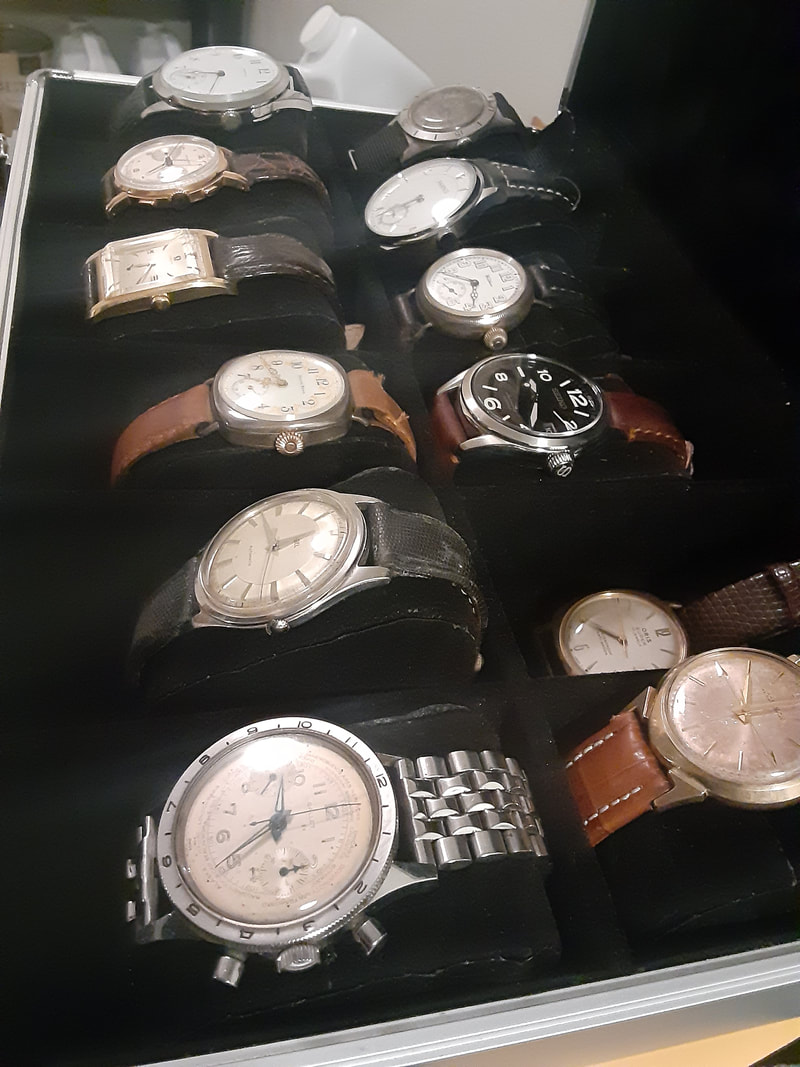 |
Author
Archives
May 2024
Categories |

 RSS Feed